
Two Pills, One Roofing Choice – how to chose ?
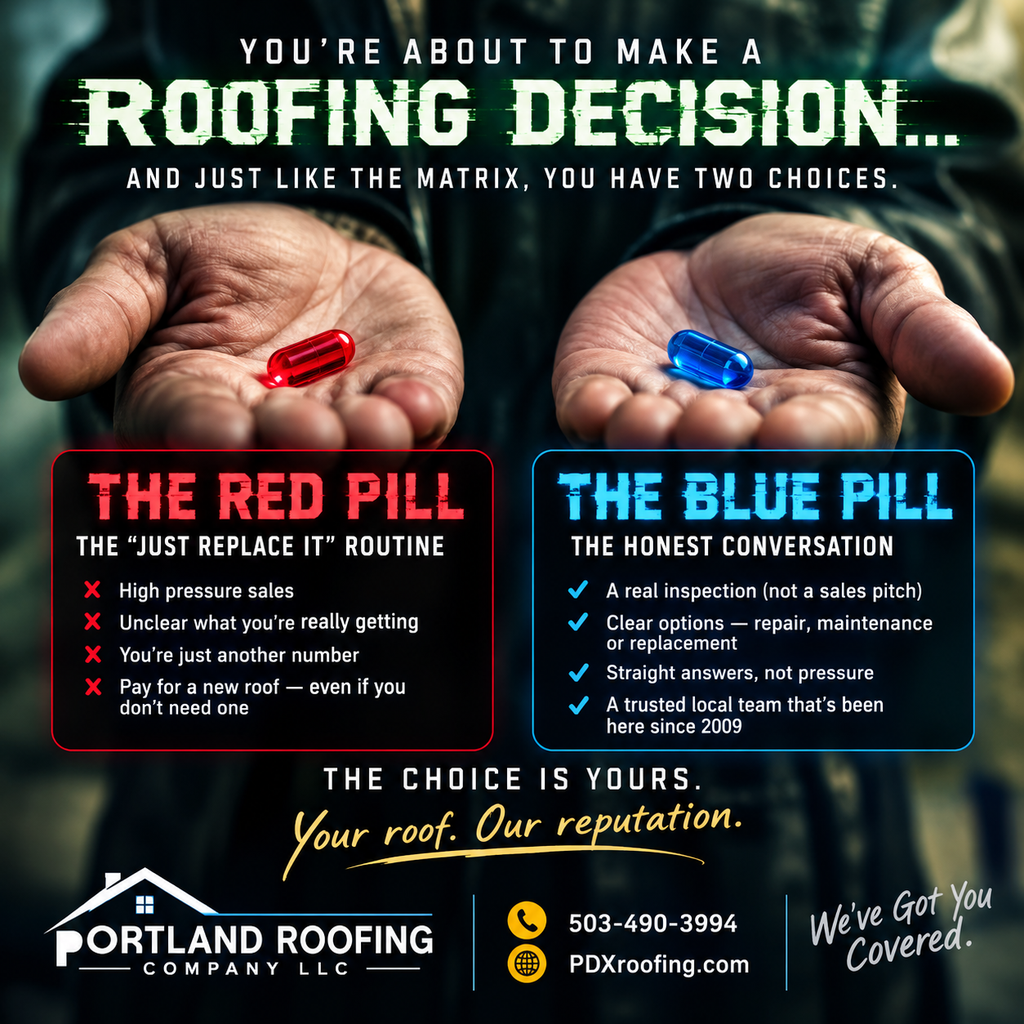
The Roofing Matrix: Red Pill or Blue Pill? How to Choose Between Roof Repair and Roof Replacement in Portland, Oregon
You’re about to make a roofing decision. Do you know what you’re really signing up for? The last thing you want is to spend thousands on a new roof, only to discover that a repair would have addressed the problem.”
Imagine standing at a crossroads. On one side, you have pressure to replace your roof immediately. On the other, you have the information you need to make a confident decision.
Welcome to the Roofing Matrix.
Okay, we might be having a little fun with the movie concept, but the decision facing homeowners is very real. A new roof can be a significant investment, and knowing whether you need roof repair, roof maintenance, or a complete roof replacement can make a major difference.
If you’re a homeowner in Portland, Oregon, you already know what our Pacific Northwest weather can do to a roof. Months of rain, damp conditions, wind, falling debris, and roof moss can all create maintenance challenges.
But here’s the important question: Does every roofing problem mean you need a new roof?
Absolutely not.
At Portland Roofing Company LLC, we believe homeowners deserve honest information, practical options, and quality workmanship. Since 2009, our goal has been to help Portland-area homeowners understand their roofing needs without unnecessary pressure.
So let’s take the red pill, the blue pill, and a closer look at what really matters when making your next roofing decision.
The Red Pill: Replacing Your Roof Without Asking the Right Questions
In our Roofing Matrix spoof, the red pill represents making a roofing decision without fully understanding your options.
You notice a leak. You see moss growing across your shingles. Perhaps a roofing contractor looks at your roof and recommends a complete replacement.
Suddenly, you’re facing a potentially expensive project.
But before agreeing to the work, shouldn’t you understand why replacement is being recommended?
A roof replacement may absolutely be the right decision. However, a homeowner should understand the condition of the existing roof, the problems that need to be addressed, and whether a repair is a reasonable alternative.
Here are a few questions worth asking before signing a roofing contract:
- What specific problems did you find on my roof?
- Are the shingles deteriorating throughout the roof or only in certain areas?
- Is a repair a reasonable option?
- How much useful life might the existing roof have left?
- What are the advantages and disadvantages of repairing versus replacing it?
- What exactly is included in the estimate?
A professional roofing contractor should be able to explain the reasoning behind a recommendation in language you can understand.
The goal isn’t to avoid replacing your roof at all costs. It’s to avoid making a major financial decision without understanding why you’re making it.
The Blue Pill: Knowledge, Honest Advice, and Better Roofing Decisions
The blue pill represents taking the time to understand your roof before deciding what to do.
Instead of making a decision based on fear, urgency, or a single recommendation, you gather information about the condition of your roof and the options available.
For some homeowners, that may mean a targeted roof repair. For others, it could mean professional roof maintenance or a complete roof replacement.
The right solution depends on several factors, including the age of the roof, the condition of the shingles, the extent of any damage, previous repairs, and the likelihood of additional problems developing.
At Portland Roofing Company, we believe the conversation should start with the roof itself.
A roofing estimate should help you understand what needs attention, what work is recommended, and what your options are. You should have an opportunity to ask questions and make an informed decision.
No mysterious roofing language. No guessing what you’re paying for. Just a clear explanation of the work being proposed.
The choice is yours. Make it an informed one.
Roof Repair or Roof Replacement: How Do You Know Which You Need?
One of the most common questions homeowners ask is whether they should repair their existing roof or replace it entirely.
There isn’t one answer that applies to every home. Two roofs of the same age can be in very different conditions depending on installation quality, ventilation, maintenance, weather exposure, and the materials used.
Here’s what to consider.
When Roof Repair May Make Sense
Roof repair may be a reasonable option when the problem is limited and the surrounding roofing materials remain in serviceable condition.
Examples can include:
- A localized leak caused by a specific roofing problem.
- Damaged or missing shingles in a limited area.
- Certain flashing problems around roof penetrations or transitions.
- Localized damage that can be corrected without compromising the surrounding roof.
- A roof that is otherwise performing well but needs a specific repair.
The important distinction is between an isolated problem and a symptom of broader roof deterioration.
For example, a leak near a chimney may involve flashing that needs attention. But water entering the home doesn’t automatically reveal where the problem started. A proper inspection can help identify the likely source and determine what work is appropriate.
Repairs also have limitations. Older shingles can become brittle, and disturbing surrounding materials may cause additional damage. If the roof is nearing the end of its useful life, a repair may be less practical than replacement.
A qualified roofing contractor can help you weigh those considerations before work begins.
When Roof Replacement May Be the Better Investment
Roof replacement becomes more compelling when the roofing system has widespread deterioration, recurring problems, or damage that cannot be addressed reliably through isolated repairs.
Signs that warrant a closer look include:
- Widespread shingle deterioration or significant granule loss.
- Numerous damaged, curling, or missing shingles.
- Repeated leaks in different areas.
- Deteriorating roofing materials across large sections of the roof.
- A roof that has reached the later stages of its expected service life.
- Repair needs that continue to accumulate across the roof.
Age is an important consideration, but it should not be the only deciding factor. The actual condition of the roof matters.
Likewise, a single leak doesn’t necessarily mean the entire roof has failed.
A good replacement recommendation should explain the condition of the existing roofing system and why replacement is preferable to continued repairs.
When comparing estimates, make sure you’re comparing similar scopes of work, materials, and project details—not just the bottom-line price.
click on link below for a roofing checklist:
The Portland Factor: How Oregon Weather Affects Your Roof
Roofing in Portland comes with challenges that homeowners should understand.
Our damp climate makes regular roof maintenance particularly important. Moisture, shade, debris, and organic growth can all affect how a roof performs over time.
Roof Moss and Moisture
Moss is a familiar sight on many Portland-area roofs. It tends to thrive in damp, shaded conditions, particularly where leaves and other debris accumulate.
But here’s where homeowners can get caught in the Roofing Matrix: Moss does not automatically mean your roof needs to be replaced.
Depending on the roof’s condition, professional moss treatment and appropriate maintenance may be sufficient.
However, established moss can lift shingles, retain moisture, and contribute to deterioration. If shingles are already damaged or the roof is approaching the end of its useful life, simply treating the moss won’t solve the underlying problem.
The right approach is to evaluate both the moss and the condition of the roofing materials beneath it.
Roof cleaning and moss removal should also be performed using methods appropriate for the specific roofing material. Aggressive cleaning can damage shingles, so avoid assuming that more pressure means better results.
Rain, Leaks, and Roof Drainage
Portland’s rainy season puts your roof and drainage system to work.
Clogged gutters, damaged flashing, deteriorated shingles, and problems around skylights or other roof penetrations can contribute to water intrusion.
Homeowners should pay attention to warning signs such as water stains on ceilings, damp areas in the attic, visible shingle damage, and gutters that are not draining properly.
Keep in mind that the location of an interior water stain doesn’t always identify the exact point where water entered the roof. Water can travel along roof decking and framing before becoming visible indoors.
If you notice a leak, arrange an assessment promptly. Addressing a roofing problem early may help prevent more extensive damage.
Roof Ventilation Matters, Too
Roof ventilation is another consideration when evaluating a roofing system.
Inadequate ventilation or an improperly designed attic system can contribute to moisture problems under certain conditions. A roofing project may be an opportunity to evaluate ventilation, attic conditions, and whether improvements are appropriate.
Ventilation requirements depend on the home’s design and existing system. Any recommendation should be based on the actual conditions rather than a one-size-fits-all solution.
What Should You Look for in a Portland Roofing Contractor?
Choosing a roofing contractor is about more than comparing prices.
You want a company that explains its recommendations, communicates clearly, and follows through on the work it promises to perform.
Before hiring a roofing company in Portland, consider these questions.
1. Does the Contractor Explain the Problem?
You should understand what the contractor found and why the proposed work is necessary.
Ask for photographs when appropriate, especially if the problem is difficult to see from the ground.
2. Are the Estimate and Scope of Work Clear?
A written estimate should identify the work being proposed, the roofing materials, relevant project details, and any important exclusions or conditions.
For a replacement project, ask how the contractor will handle damaged roof decking discovered during tear-off and how any additional work will be communicated and priced.
You should understand what is included before the project begins.
3. Is the Contractor Properly Licensed and Insured?
Verify the contractor’s current Oregon Construction Contractors Board (CCB) license and ask about applicable insurance coverage.
Take time to review the contract, payment terms, warranty information, and any applicable permit requirements.
A professional company should be willing to answer reasonable questions about its credentials and business practices.
4. Who Will Perform the Work?
Ask whether the roofing work will be performed by the company’s own crews or subcontractors, who will supervise the project, and whom you should contact with questions.
Clear communication during a roofing project can make the experience much easier for a homeowner.
5. Does the Contractor Pressure You to Decide Immediately?
Be cautious if a contractor makes dramatic claims but cannot explain the evidence behind them.
Legitimate roofing problems sometimes require prompt attention, particularly when water is entering the home. However, you should still be able to ask questions and understand the recommended work.
A trustworthy contractor should explain the urgency of a problem rather than relying on pressure alone.
Why Portland Roofing Company Takes a Different Approach
At Portland Roofing Company LLC, we believe the relationship should begin with an honest conversation.
Founded in 2009, our locally owned company serves homeowners throughout the Portland area with roofing services that include roof replacement, roof repair, maintenance, and related roofing work.
We understand that a roof is a major part of your home’s protection and that replacing it can represent a significant investment.
That’s why we believe in explaining what we find and helping homeowners understand their options.
Our approach is straightforward:
- Clear recommendations: Understand the condition of your roof and the reasoning behind the proposed work.
- Practical options: Discuss whether repair, maintenance, or replacement may be appropriate.
- Quality workmanship: Have your project completed according to the agreed scope of work.
- Communication: Know whom to contact when you have questions about your project.
- Accountability: Work with a local company that understands the importance of its reputation.
We aren’t here to tell every homeowner that their roof needs replacing. We are here to help homeowners understand what their roof needs and determine the appropriate next step.
Sometimes the answer is a repair. Sometimes maintenance is worthwhile. And sometimes replacing an aging roof is the most practical long-term decision.
The answer should come from the condition of the roof—not a sales script.
Frequently Asked Questions About Roof Repair and Replacement in Portland
How do I know if my Portland home needs a new roof?
Signs such as widespread shingle deterioration, recurring leaks, damaged roofing materials, and an aging roof may indicate that replacement is worth considering. A professional inspection can help determine whether repair remains a reasonable option.
Is it cheaper to repair a roof or replace it?
A localized repair generally costs less upfront than replacing an entire roof. However, repeated repairs on a deteriorating roof can add up. Compare the immediate repair cost with the roof’s overall condition, likely remaining service life, and potential for future problems.
How long does an asphalt shingle roof last in Oregon?
Roof life varies according to shingle type, installation quality, ventilation, maintenance, and weather exposure. A manufacturer’s stated warranty period is not a guarantee that a roof will last that long under every condition. A roof inspection is a better way to assess the condition of a particular roof.
Does roof moss mean I need a roof replacement?
No. Moss may be manageable through appropriate professional treatment and maintenance when the shingles remain in good condition. If moss has contributed to widespread deterioration, additional work or replacement may be necessary.
Should I get more than one roofing estimate?
Comparing estimates can help you understand the scope of work, material options, warranties, and pricing. Make sure each contractor is evaluating the same areas and that you’re comparing equivalent work rather than price alone.
When should I schedule a roof inspection?
Consider an inspection if your roof is aging, you notice missing or damaged shingles, leaks develop, or you’re concerned about moss and moisture. It’s also sensible to assess the roof before buying or selling a home or planning a major roofing investment.
Ready to Get Out of the Roofing Matrix?
You don’t have to make your roofing decision in the dark.
Whether you’re dealing with a roof leak, concerned about moss, considering roof maintenance, or wondering whether it’s time for a complete roof replacement, start by understanding the condition of your roof.
Ask questions. Compare your options. Make a decision based on the facts.
Before you spend thousands on a new roof, make sure you understand what your roof actually needs.
Contact Portland Roofing Company LLC to discuss your roofing concerns and request an estimate.
Call us at 503-490-3994 or visit PDXroofing.com to schedule online.
Serving Portland-area homeowners since 2009.
Portland Roofing Company LLC — We’ve Got You Covered.
Your roof. Our reputation.