
The Hidden Danger of Improper Bathroom & Kitchen Venting
A properly installed roof exhaust vent is one of the most overlooked—but most important—parts of your roofing and home ventilation system. While homeowners often focus on shingles, gutters, and attic insulation, the way humid air, grease, odors, and cooking byproducts are exhausted from bathrooms and kitchens plays a critical role in protecting your roof and your home’s structure.
Every day, your bathroom exhaust fan removes moisture from showers and baths, while your kitchen range hood removes steam, smoke, grease, heat, and cooking odors. If this air is not vented directly outside through a designated roof vent, it can become trapped inside the attic or other concealed spaces, leading to mold growth, wood rot, insulation damage, poor indoor air quality, and premature roof deterioration.
What Does a Roof Exhaust Vent Do?
Bathroom exhaust fans and kitchen range hoods are designed to remove warm, moisture-filled, and contaminated air from inside your home.
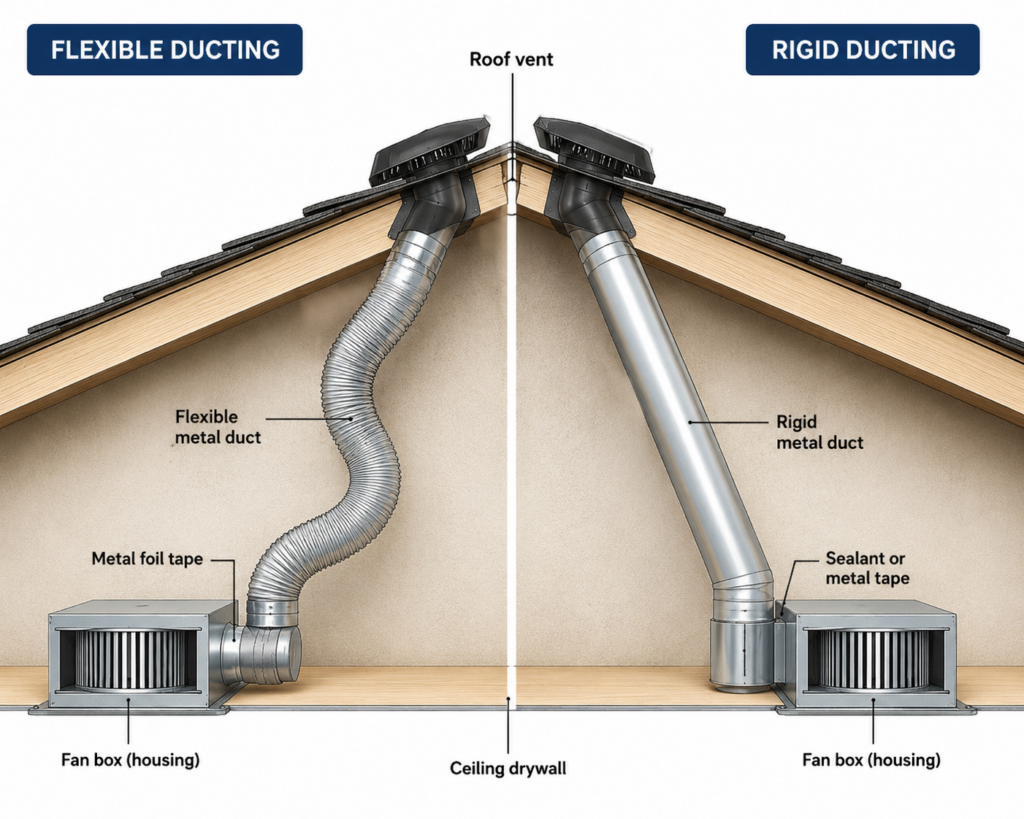
A properly installed exhaust system captures that air and carries it through metal ductwork to a dedicated roof vent, where it is safely discharged outside.
This simple system helps:
- Remove excess humidity
- Prevent condensation
- Eliminate cooking odors and smoke
- Reduce grease buildup inside the home
- Improve indoor air quality
- Protect your attic and roofing system from moisture damage
Without a designated roof vent, that air has nowhere to go except into your attic or other enclosed areas.
Why Venting Into the Attic Is a Bad Idea
Unfortunately, it is not uncommon to find bathroom fans or kitchen exhaust ducts that terminate inside the attic rather than venting completely outdoors.
While this may seem harmless, it can create expensive problems over time.
Excess Moisture
Bathrooms generate a tremendous amount of humidity during showers and baths. When that moisture enters a cooler attic, it condenses on rafters, roof decking, nails, and insulation.
Over time this can lead to:
- Mold and mildew growth
- Wood rot
- Rusting roofing nails
- Wet insulation
- Reduced energy efficiency
- Structural deterioration
Kitchen Exhaust Creates Additional Problems
Kitchen range hoods remove much more than moisture.
Cooking produces:
- Steam
- Smoke
- Grease particles
- Heat
- Food odors
- Airborne contaminants
If a kitchen exhaust fan vents into the attic instead of outside, grease can coat framing members and insulation while moisture accumulates throughout the attic. This combination attracts dust, creates unpleasant odors, and can even become a fire hazard over time.
Protecting Your Roofing Investment
Your roof decking is designed to remain dry.
Repeated exposure to moisture from improperly vented bathroom fans or kitchen exhaust systems can cause plywood or OSB roof sheathing to deteriorate long before the shingles reach the end of their lifespan.
Many homeowners are surprised to learn that what should have been a straightforward roof replacement turns into a much larger project because years of trapped moisture damaged the roof structure beneath the shingles.
Proper roof ventilation helps extend the life of:
- Roof decking
- Rafters
- Trusses
- Underlayment
- Shingles
- Attic insulation
Flexible Duct vs. Rigid Duct
Both flexible metal ducting and rigid metal ducting can be used to connect a bathroom fan or kitchen exhaust hood to a roof vent, but there are important differences.
Flexible Metal Duct
Flexible ducting is easier to install and works well when space is limited or obstacles must be avoided.
Advantages
- Easier installation
- Lower material cost
- Good for retrofit projects
Disadvantages
- Corrugated interior slows airflow
- Moisture can collect in low spots
- Greater airflow resistance
- Can sag if not properly supported
- Grease from kitchen exhaust can accumulate inside the ridges more easily
Rigid Metal Duct
Rigid metal ducting is generally considered the preferred long-term solution whenever possible.
Its smooth interior allows moisture, smoke, grease particles, and warm air to travel efficiently to the roof vent with less resistance.
Advantages
- Better airflow
- Less moisture buildup
- Reduced grease accumulation
- Easier to clean
- Longer service life
- More energy efficient
Disadvantages
- More difficult to install
- Requires additional planning
- Slightly higher material cost
Proper Installation Matters
Even the best ducting will not perform correctly if it is installed improperly.
A professional installation should include:
- A dedicated roof exhaust vent
- Properly sealed duct connections using foil HVAC tape (never cloth duct tape)
- Minimal bends in the ductwork
- Properly supported ducting to prevent sagging
- Insulated ductwork when required to reduce condensation
- An exterior vent equipped with a backdraft damper
- Proper flashing around the roof penetration to prevent leaks
Signs Your Bathroom or Kitchen Exhaust May Not Be Properly Vented
You may have an improperly vented exhaust system if you notice:
- Mold in the attic
- Damp insulation
- Frost on roofing nails during winter
- Musty odors
- Peeling paint in bathrooms
- Condensation on windows after showering
- Lingering cooking odors
- Greasy residue near kitchen cabinets or ceilings
- Water stains around bathroom or kitchen ceilings
These warning signs often indicate that moisture and contaminated air are not leaving your home as intended.
A Small Roof Vent That Protects Your Entire Home
Although roof exhaust vents are relatively small, they perform an essential job every single day. By directing warm, humid air, cooking smoke, grease particles, and odors safely outside, they help protect your attic, insulation, framing, and roofing materials from long-term moisture damage.
Whether your home uses flexible metal ducting or rigid metal ducting, the most important factor is ensuring that your bathroom exhaust fans and kitchen range hood are connected to a dedicated roof vent that exhausts completely outside the home—not into the attic or crawlspace.
Proper ventilation improves indoor air quality, helps prevent costly repairs, extends the life of your roofing system, and protects one of your home’s largest investments.
Need Your Bathroom or Kitchen Roof Vent Inspected?
If you’re replacing your roof or aren’t sure where your bathroom exhaust fan or kitchen range hood vents, now is the perfect time to have it inspected. At Portland Roofing Co., we verify that roof penetrations are properly flashed and that bathroom and kitchen exhaust systems are correctly vented through the roofing system to help prevent leaks, moisture damage, mold growth, and costly structural repairs for years to come.